This project is made possible through the full material fee support by Babel-cultural organization.

Room1:
‘The Omnipresence of Text’ 無所不在的文字
The Omnipresence of Text, 2018
Thermal papers, quotes from ‘Ether’ by Zhang Ran
Dimensions variable
無所不在的文字, 2018
感熱紙、摘自小說 ‘以太’ 的字句
尺寸可變
Room2:
‘The Omnipresence of Images’ in form of ‘Unmanned Store’
無所不在的圖像(無人商店)
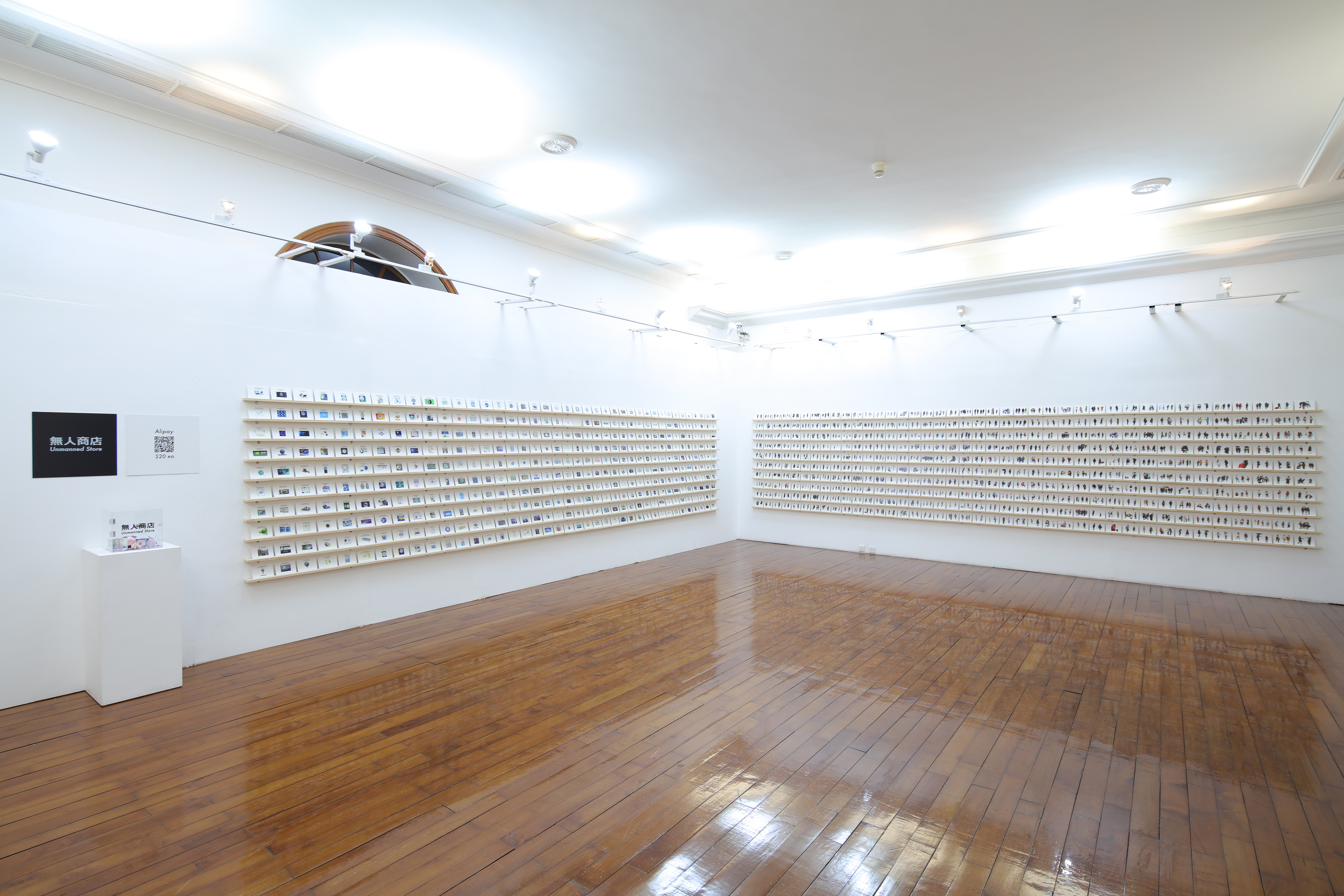
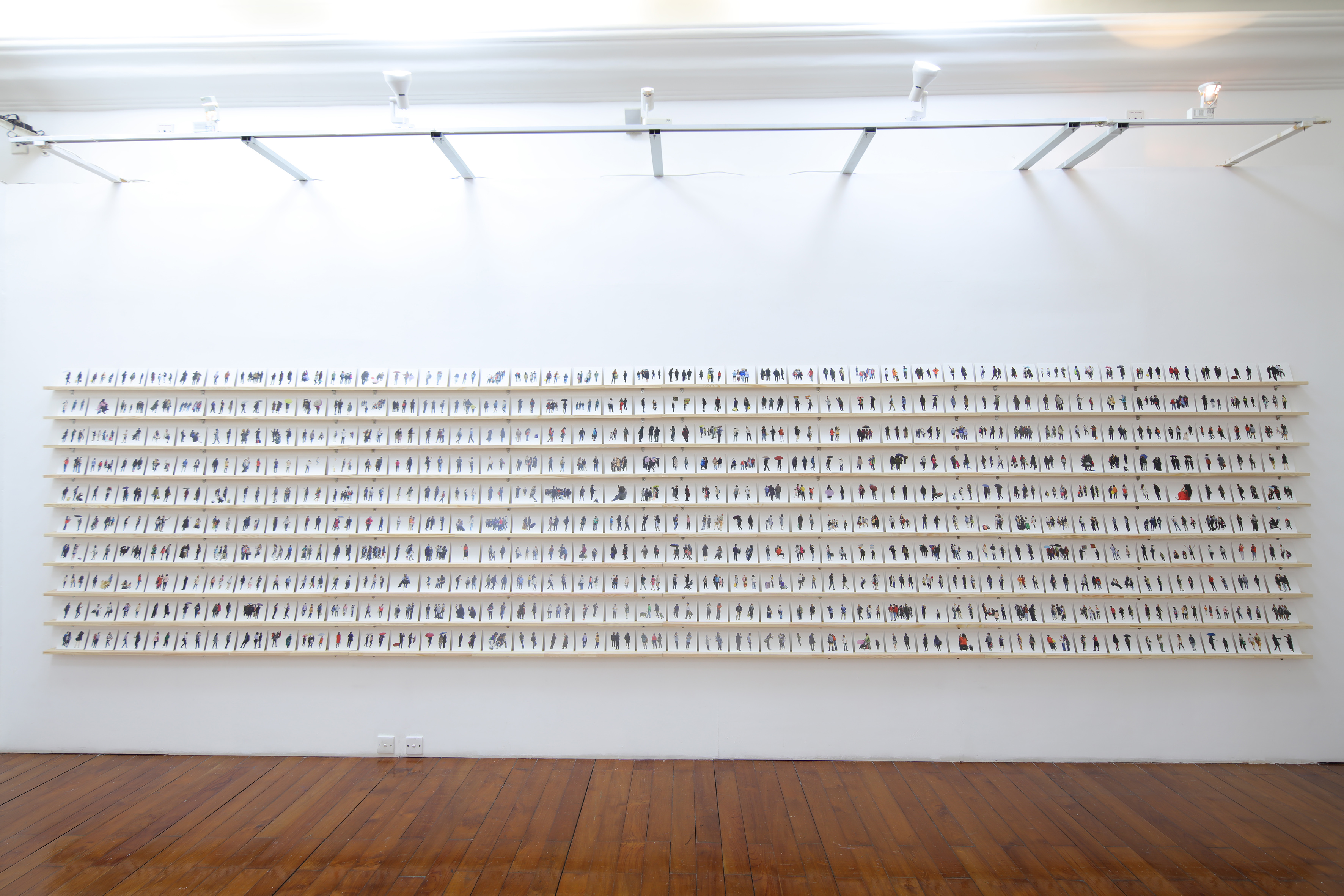
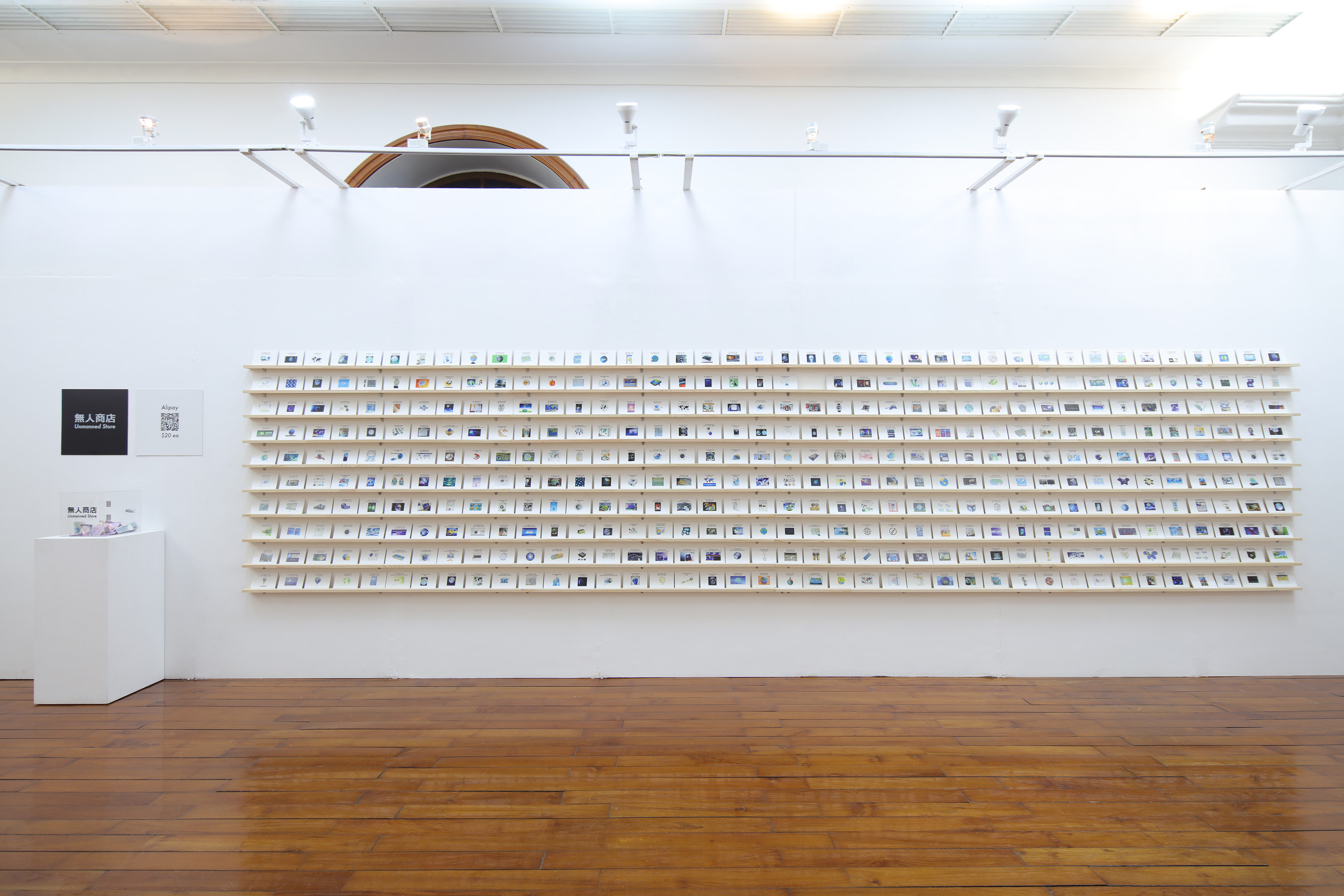
1200 postcards for sale
14.8 X 10.3 cm each
Dimensions variable
1200 張明信片
每張14.8 X 10.3 cm
尺寸可變
Room3: ‘The Omnipresence of Complex’
無所不在的合成物
The Omnipresence of Complex, 2018
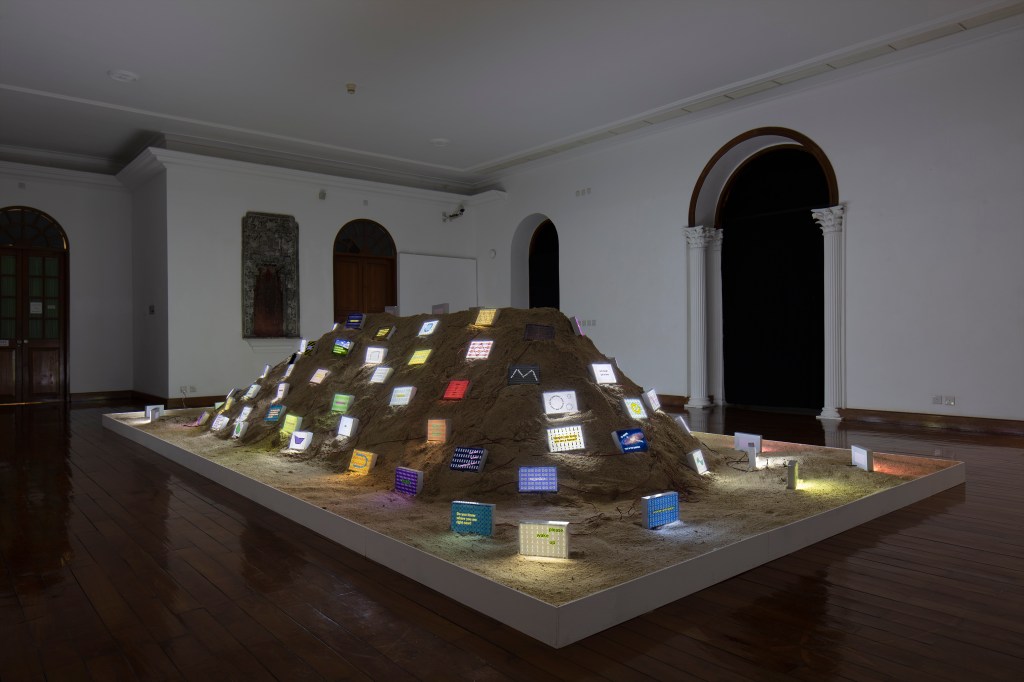
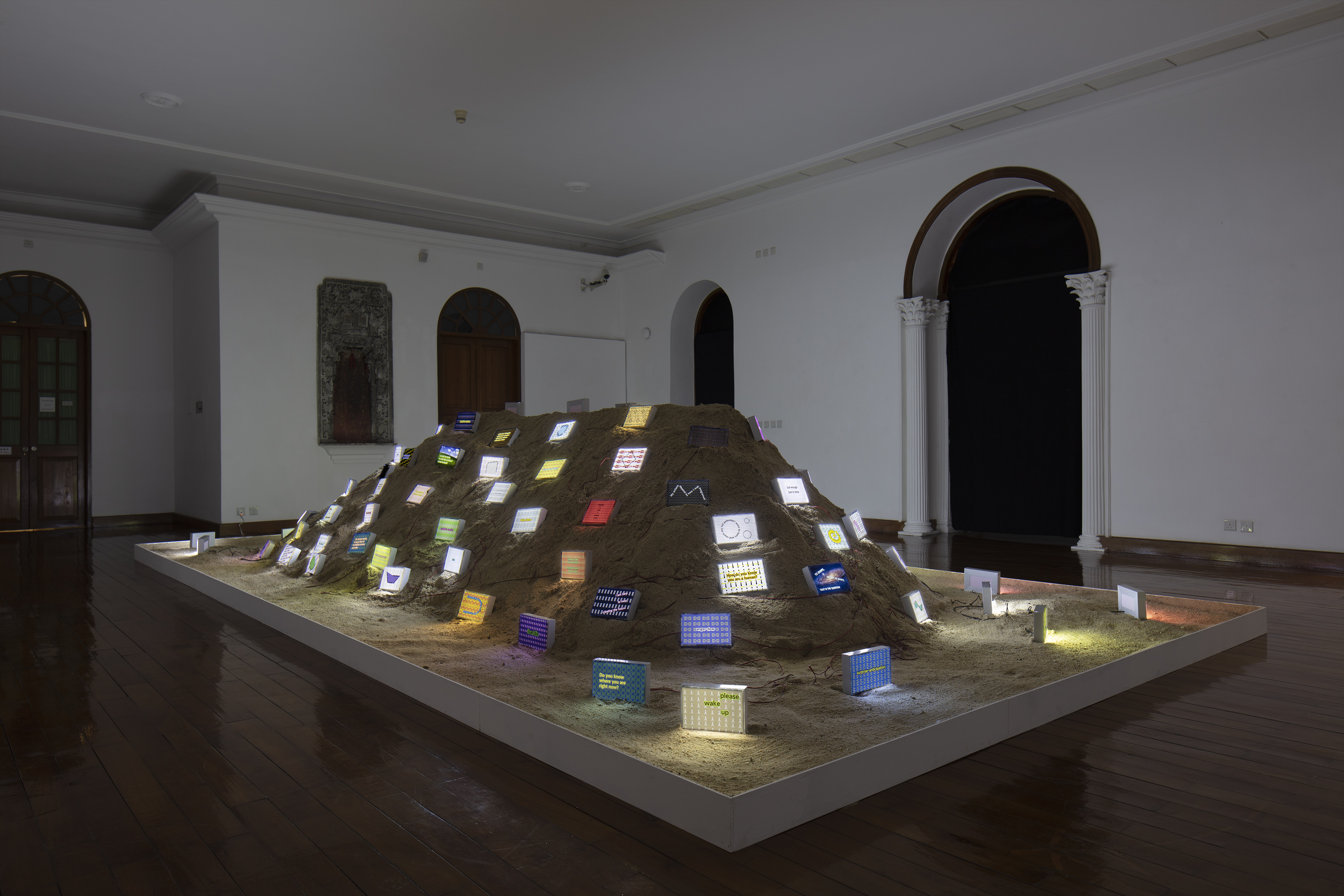
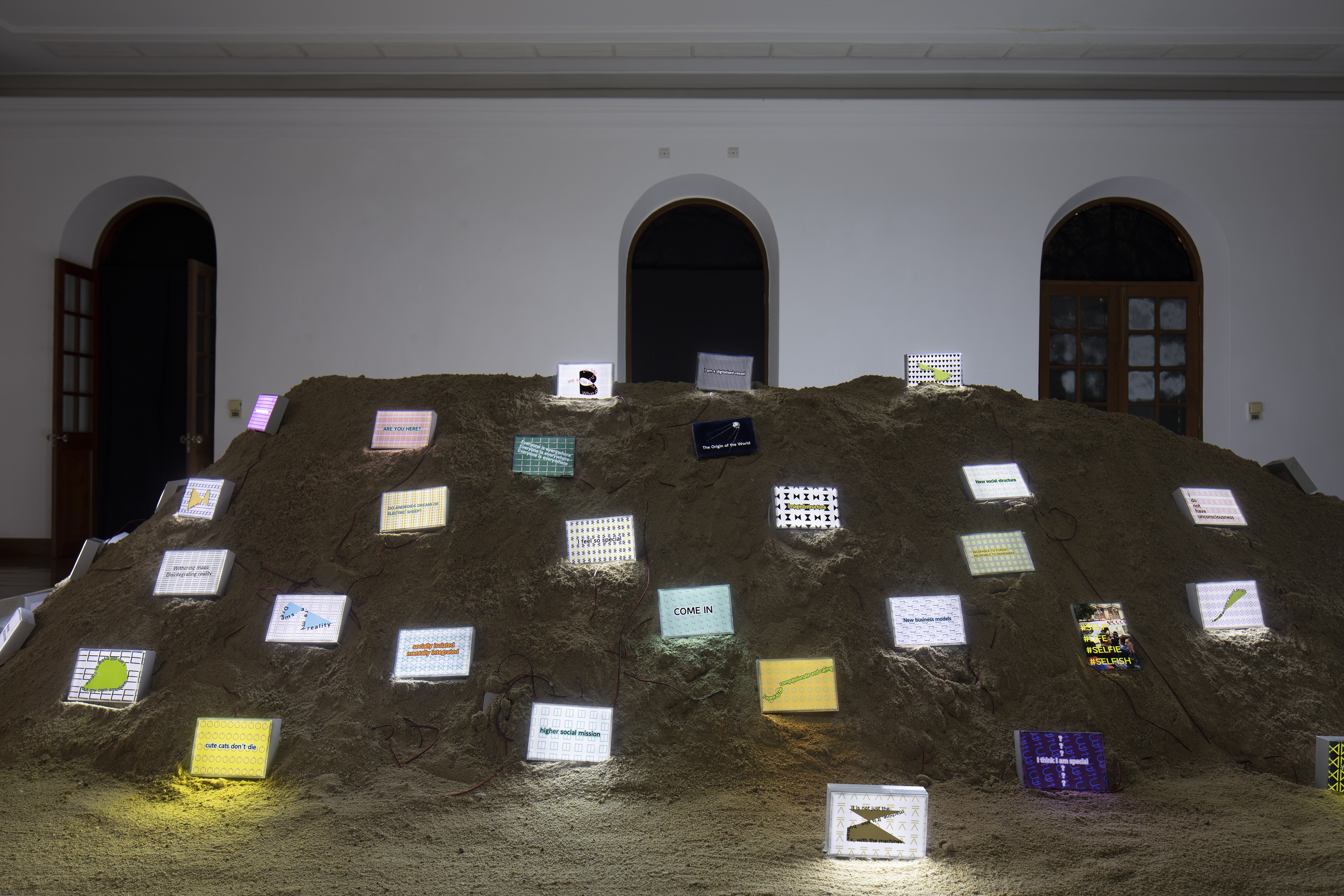
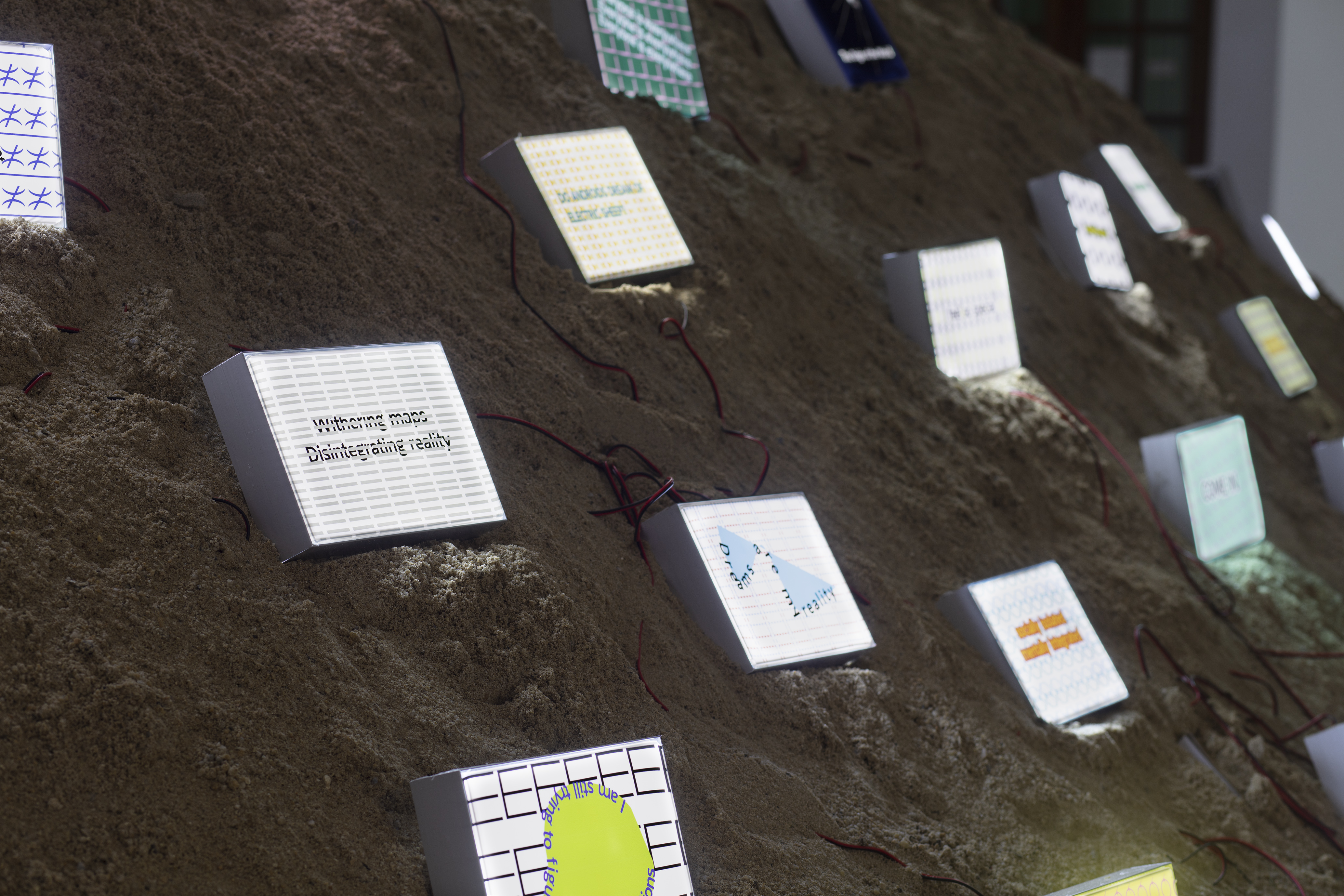
Collected text and quotes from books, online webpage, video and personal thought, lightbox, sand, wooden box
100 lightboxes, 20 X 13.5 cm each
Dimensions variable
無所不在的合成物,2018
燈箱、沙子、木箱,來自書籍 、網頁、視頻、個人想法的文字和引語
100個燈箱,每個20 X 13.5 cm
尺寸可變
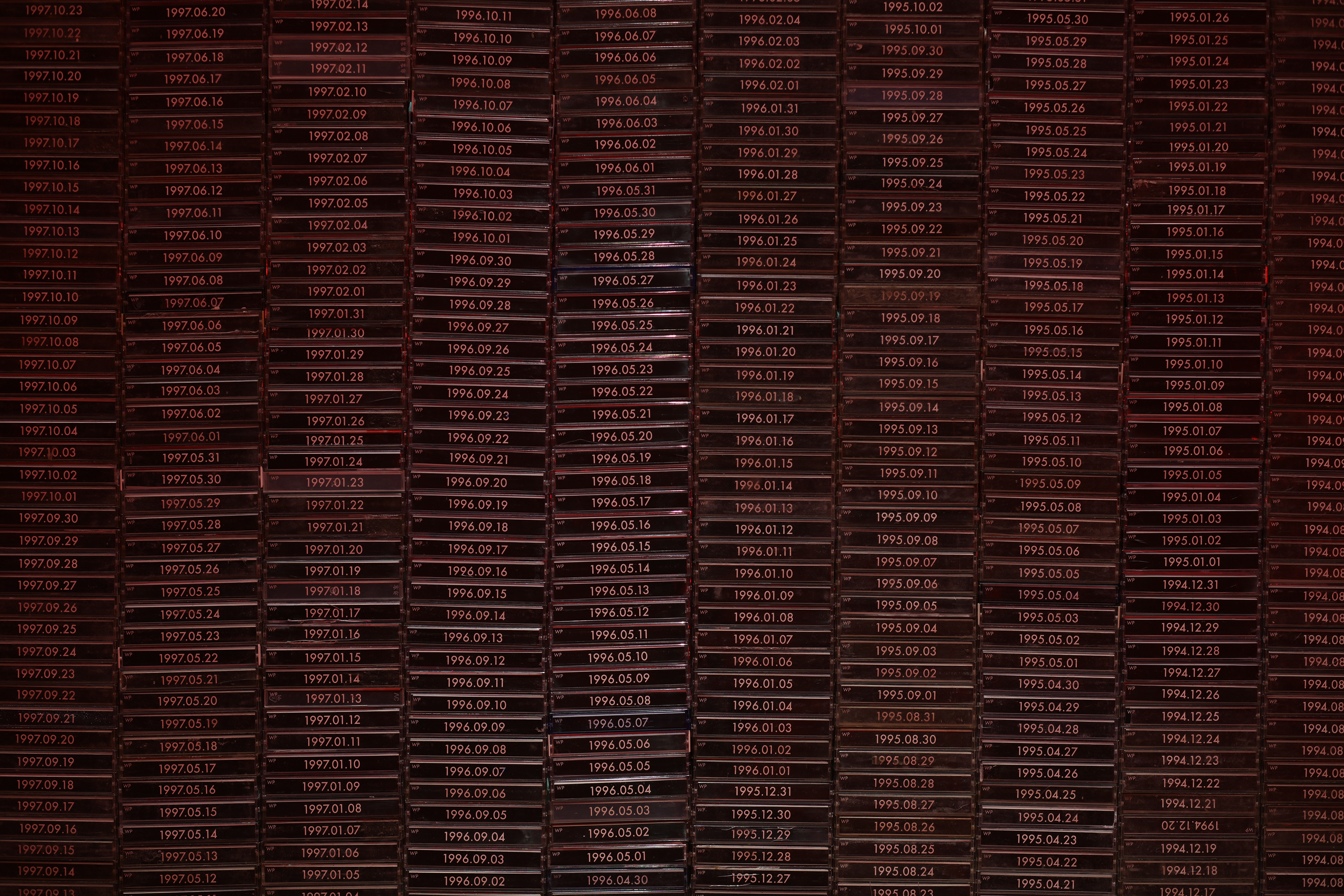
Room4: ‘Past’ 過去
Past, 2018-
2000 second-hand cassette tapes
Dimensions variable
過去,2018-
2000 盒二手磁帶
尺寸可變
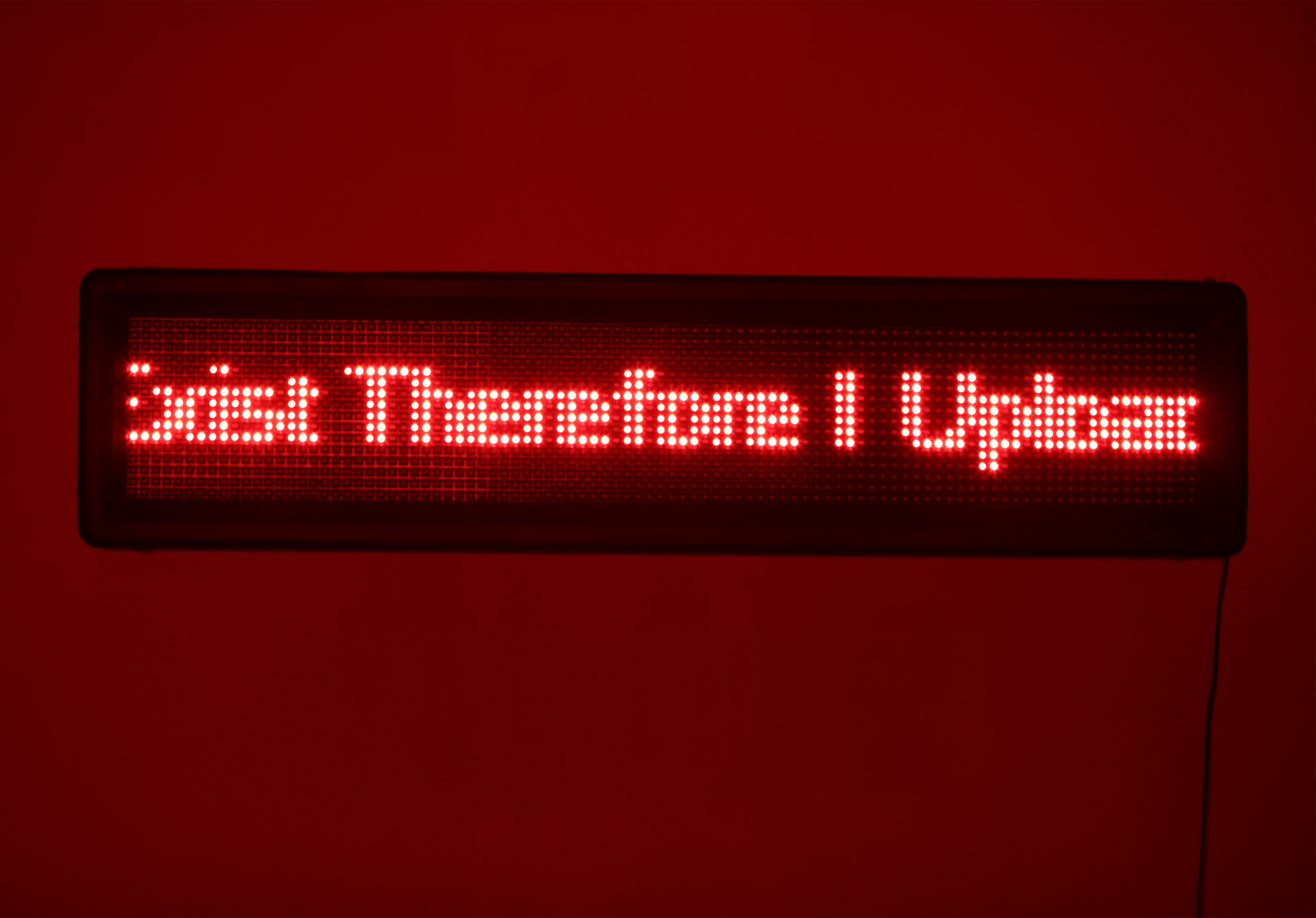
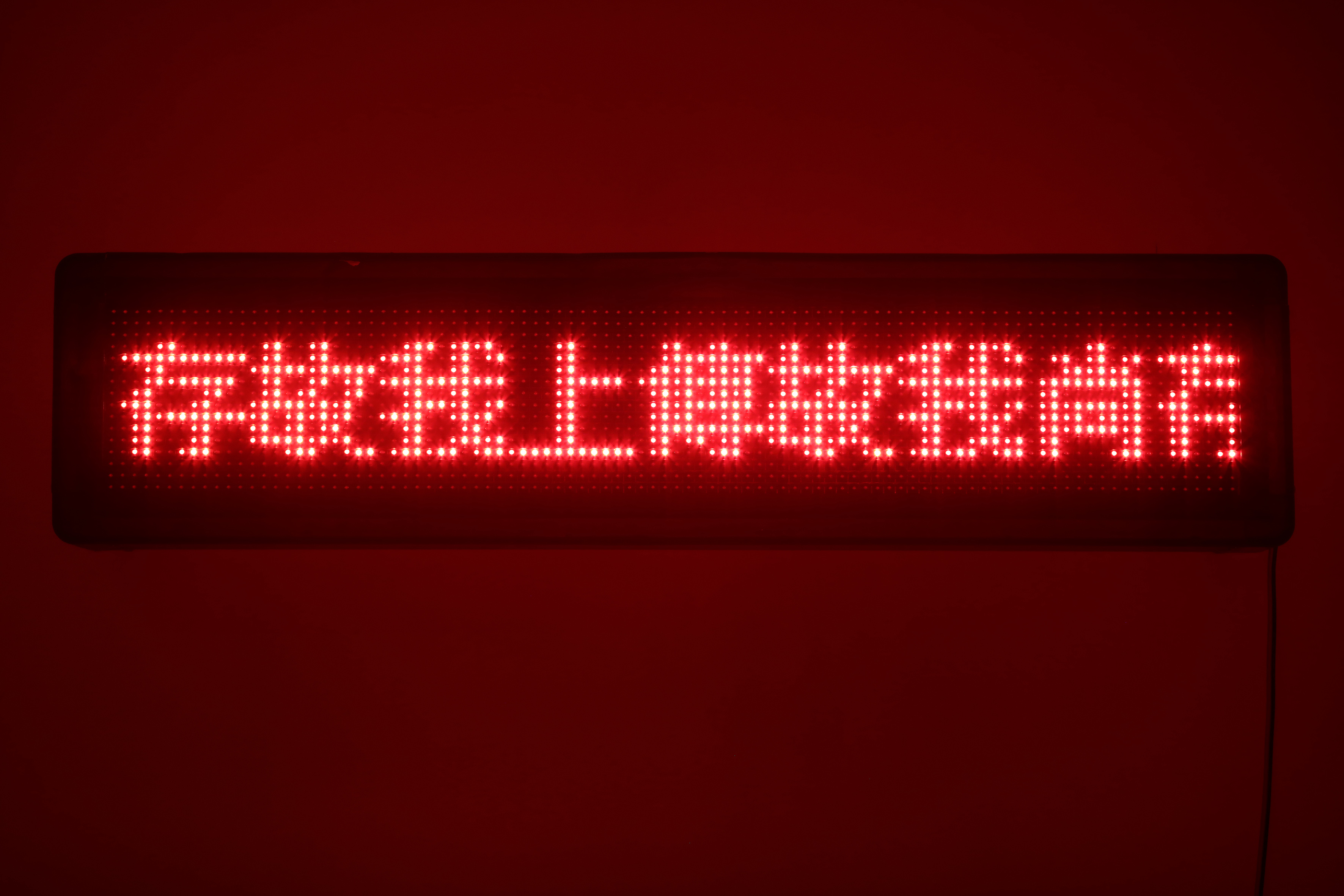
I Upload Therefore I Exist, 2017
LED light
Dimensions variable
我上傳故我尚存,2017
LED 燈
尺寸可變
__________________________________________________________
I upload therefore I exist
An exhibition by Wong Weng Io
我上傳故我尚存
黃詠瑤作品展
Organization: BABEL – Cultural Organization
組織者:巴別塔文化組織
Co-organization: Orient Foundation
協辦單位:東方基金會
Support: Cultural Affairs Bureau of the Macao SAR Government
贊助:澳門特別行政區政府文化局
Location: Casa Garden, Headquarters of Oriental Foundation
展覽地點:東方基金會會址
Opening date: May 8th, 6.30pm
展覽開始日:5月8日晚上6時30分
Duration of the exhibition: May 8th to 7th June
展覽日期:5月8日至6月7日
I upload therefore I exist – an exhibition by Wong Weng Io opening will take place May 8th, Tuesday, at 6.30pm, at the headquarters of the Oriental Foundation.
《我上傳故我尚存—黃詠瑤作品展》將於5月8日(周二)晚上6時半於東方基金會會址開幕。
The exhibition I upload therefore I exist, curated by Margarida Saraiva, explores questions about the relationships and impact in-between human existence, technology, information, media, manipulation, personal data, artificial existence and robotics. Researching, thinking, using intuitive cognition and improvisation, as a way to picture a sensitive and subjective understanding about the future of society and the world has occupied Wong Weng Io for more than a year. The artist went through science fiction, philosophy, film, video and raw footage. The result of this process is now presented in the form of an exhibition that explores the paradoxes between the physical and the virtual realities, the visible and the invisible, the tangible and the intangible, through artworks that are understood not as any form of conclusion or knowledge, but as starting points, as doors capable of opening up new universes for debate.
《我上傳故我尚存》由沙海花(Margarida Saraiva)策展。展覽探索有關人類存在、科技、信息、媒體、操控、個人數據、人工智能和機器之間的關係與相互影響。以研究、思考、運用直覺感悟和即興創作,探尋社會和未來世界的敏感和主觀認知,成為了黃詠瑤過去一年的思想重心。她漫遊科幻小說、哲學、電影、錄像和原始素材後,現以展覽的方式探討物質和虛擬現實間的矛盾,其有形與無形、可觸摸與不可觸摸。不將藝術品視作任何形式的結論或學問,而是作為出發點,作為打開新思辯世界的大門。
About the exhibition 展覽介紹
The exhibition presents large scale artwork installations titled “The Omnipresence of Text”, “The Omnipresence of Images”, “The Omnipresence of Complex” and “Past”.
展覽展出大型藝術裝置,包括《無所不在的文字》、《無所不在的圖像》、《無所不在的物件》和《過去》。
“The Omnipresence of text” is inspired by the Ether, a science fiction novel set in the United States, written by Zhang Ran, a Chinese author born in 1981. In the future society described by the author, free-thinking citizens find no other space rather than silent sign language to express their views, due to omnipresence of surveillance. Wong Weng Io uses quotes from the novel, printed in hundreds of small papers, being the text partially blocked by a black marker. The artist assumes the role of the “manipulator”, producing a time-contraction and displacement of the story setting, which expands the question of information, counter-information, manipulation and falsification into another dimension, one that is atemporal, transhistorical, and transnational.
作品《無所不在的文字》靈感源於科幻小说《以太》。該部科幻小說由中國作家張冉所寫,內容以美國為背景。故事講述在未來社會中,思想自由的市民只能以無聲的手語表達所想,皆因,監控無所不在。黃詠瑤將從書中摘取的字句印在數百張小紙上,並把部分文字劃黑,由她來當起「操控者」。令故事背景的時間縮短和錯位,將信息、反信息、操控和偽造的問題擴展到另一個層面,即為跨時代、跨歷史和跨國度之上。
As the spectator walks inside the gallery, the artist explores “The Omnipresence of Images”. In the second room of the gallery, walls are covered with 1200 postcards made of images belonging to 3 different categories: “The World”, “Humans” and “Rubbish”. All the images were transformed in postcards, displayed in a constant rhythm along very long shelves, geometrically, rigorously and systematically organized. The images, collected by the artist, who – fighting the overabundance of information and images – try to make the (im)possible sense of the contemporary and the way in which it operates both in the physical and virtual world. This gesture, of collecting, isolating part of images, reducing and miniaturizing representations of the world, people and rubbish, becomes in the work of Wong Weng Io a repetitive gesture, as an effort to achieve clarification that again produces further ambivalence. By relating the unrelated realities, downloaded or captured, the artist places the work, as a whole, and the images, in particular, in a space-time that is simultaneously virtual, real, and mental. All the postcards are for sell and visitors are welcome to purchase them trough a system of online payment or a money collection box.
隨著觀眾步入藝廊,將看到作品《無所不在的圖像》。藝廊的第二個室,1200張明信片覆蓋牆壁,當中包括了三個類別的明信片:世界、人類和垃圾。全部圖像以明信片呈現,又在長長的架子上以幾何、嚴謹和有系統的方式整齊排列。她展出這些圖像,希望與當下信息和圖像大爆炸對抗,以盼(不)可能理解當代的意義,以及其在物質和虛擬世界中的運作模式。為呈現澄淨的成品,收集、隔離部分圖像、降低和減少外界表征的這些動作成了她重複的行為,惟矛盾仍接踵而來。通過將不相關的現實、下載或剪影相關聯,將整體作品,特別是圖像,放置於虛擬、現實和精神同步的時空中。所有明信片均作出售,歡迎觀眾透過網上支付或現場收款箱購買。
The third room presents “The Omnipresence of Complex”, composed of one hundred screens, in the dark, where selected quotes from robots questioning humans “How do you know you are human?” or “Are you real? Am I real?” or even responding to the questions about the future: The future will be “new social structure”, “new economic models”, “new business models” and “new citizenship”, further add complexities to the topics in debate, introducing artificial intelligence and robotics, as a reality that further blurs existential concerns.
第三個室展出《無所不在的物件》。漆黑中,百個屏幕隨機向人類提問「你怎麼知道你是人類?」或「你是真的嗎?我是真的嗎?」甚至回答有關未來的迷思:未來將有「新的社會結構」、「新的經濟模式」、「新的商業模式」和「新的公民身份」。引申至現今熱話——引入人工智能和機械人,影射目前深化模糊存在問題的現實。
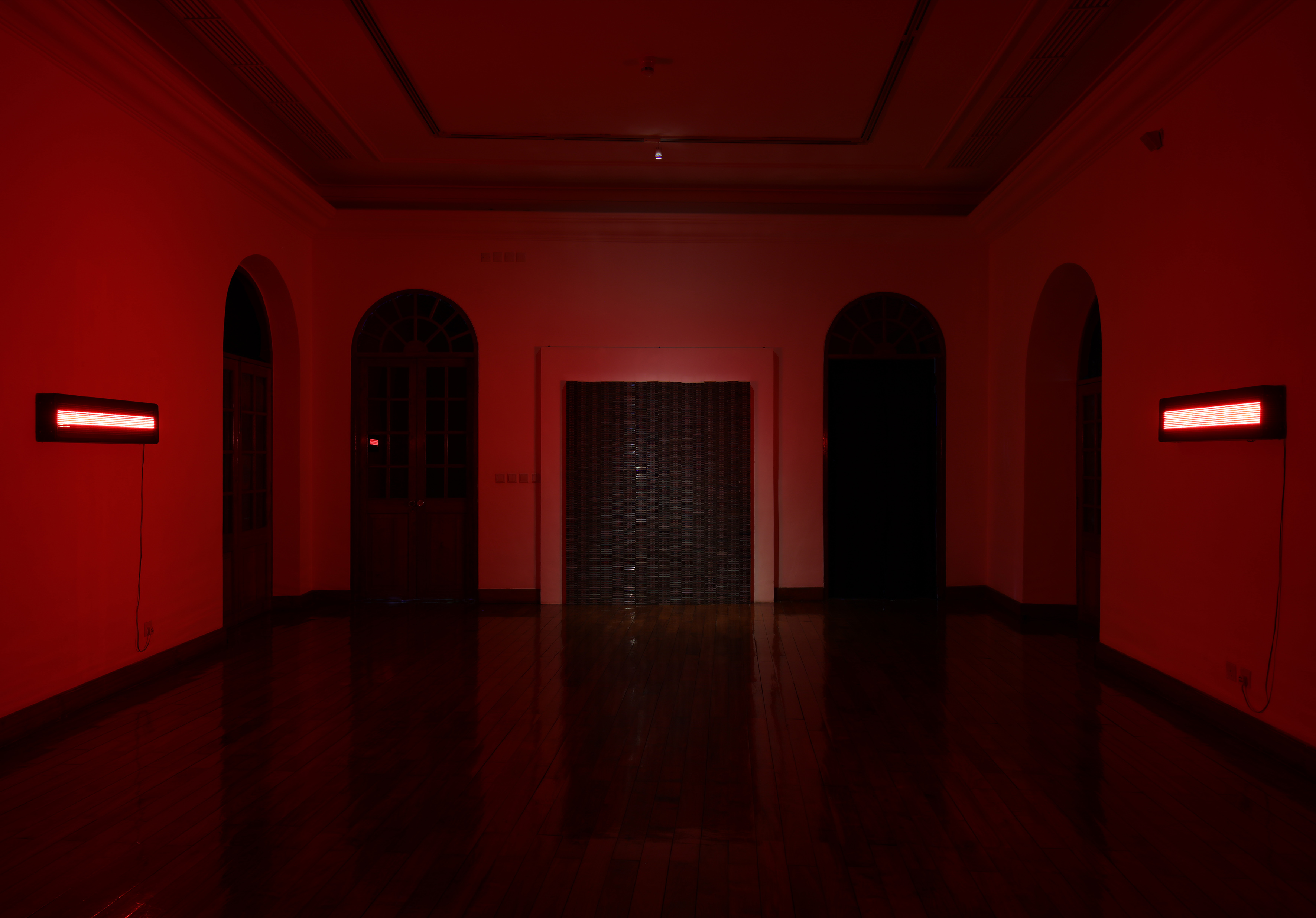
The last room addresses the question of time, memory, personal data and change. In an artwork titled “Past” recorded the 2000 days of life counted from the birth date of the artist. The past becomes a pile of worthless different “containers” of information analogical sound tapes, some of them impossible to access due to technological progress. Some others eventually collected by any corporation able to continually access them, long beyond the individual to whom they originally belonged. There are two LED lightboxes situate besides “Past”, infinitely looping “I Upload Therefore I Exist”in Chinese and English, which echoes with the title of the exhibition.
最後一個室,以時間、記憶、個人數據和改變為主題。作品《過去》記錄了她自出生日起計的2000日。過去變成了「容器」裡的無用信息,並儲存於一堆錄音帶之中, 其中一些更因技術更替而無法打開。但當中有信息終被一些機構、公司收集,以不斷回訪的方式去存取其內容,而這卻遠遠超過信息最初所屬者的存取能力。在《過去》的兩旁,掛有兩個LED燈箱,上面無限重覆、滾動著「我上傳故我尚存」的中英字句,呼應著是次展覽的標題。
Today, everyday life seems to begin to exist, exhibit, or to communicate itself as such, through contemporary participatory networks of communication Facebook, MySpace, YouTube, Second Life, and Twitter. The everyday becomes a work of art – there is no more life for exhibits as artifacts or objects. Artistic activity is now something that the artist’s shares with his or her public on the most common level of every day experience: I upload therefore I exist.
今時今日,日常生活似乎開始透過Facebook、MySpace、YouTube、第二人生(Second Life)和Twitter等的當代參與型網絡媒介存在、展示或自我溝通。日常生活成為一件藝術品,令展品不再是人工製品或物件。藝術活動現在是藝術家與他/她的公眾分享每天的日常經歷:我上傳故我尚存。
One repeatedly hears and reads that we need change, that our goal – also in art – should be change the status quo. However, in our time, change has become the status quo. Permanent change is our only reality. Therefore, to change the status quo has become to change the change. In this context it seems to make sense to question oneself about how has all this change transformed the human consciousness about its own existence? Furthermore, how will it continue to change our daily lives, gestures, habits, our self consciousness, and our relationships to each other, as well as our relation to both past and future? How language and artistic work might interrupt these processes? Will robots, like Sophia or Harmony, be our future companions? Will robots be able to answer our questions about the future? How would we be able to access our past? Who will own it? And, for what purposes?
反覆有聲音和文字說我們需要改變,說我們的目標應該是改變現狀,藝術亦然。可是,在我們的大時代裡,改變已成現狀。不斷的改變是我們唯一的現實。因此,改變現狀成為了改變變化。這種情況下,質問自己以下問題似乎合情合理:所有這些改變如何改變了人類對自身存在的意識?此外,它將如何繼續改變我們的日常生活、行為、習慣、我們的自我意識和人與人之間的關係,以及我們與過去及未來的關係?語言和藝術作品會怎樣干預這些過程?機器人索菲亞或Harmony會成為我們未來的同伴嗎?機器人能夠回答我們關於未來的問題嗎?我們可怎樣回訪我們的過去?誰會擁有我們的過去?並且,以什麼為目的?
 Weng Io Wong